
Home / Repair guides / Dryer not heating
REPAIR GUIDE
Dryer Not Heating? Here Is What to Check
The drum spins, the clothes tumble and nothing gets warm. This guide covers the common reasons a dryer stops heating, what is safe to check yourself and when it is time to call.
Start here: the five-minute checks
These checks solve a surprising number of no-heat problems.
Check the settings
Make sure the dryer is not on an air-only or fluff cycle, and that the temperature is not on low or no heat.
Clean the lint filter
A clogged filter limits airflow and can make the dryer trip its safety thermostat.
Check the breaker
Electric dryers use a two-part breaker. One half can trip, leaving the drum running without heat.
Check the vent
Pull the dryer forward and look at the vent hose and the outside flap for crushing or lint.
Why a dryer runs but does not heat
A dryer needs three things to make heat: power, airflow and working heating parts. When one is missing, the drum can still turn while the clothes stay damp. The most common causes fall into these groups.
Blocked vent
If hot air cannot leave, the dryer overheats and a safety part shuts off the heat. This is the most common cause and also a fire risk.
Tripped breaker
A half-tripped breaker gives the motor power but not the heater.
Heating element
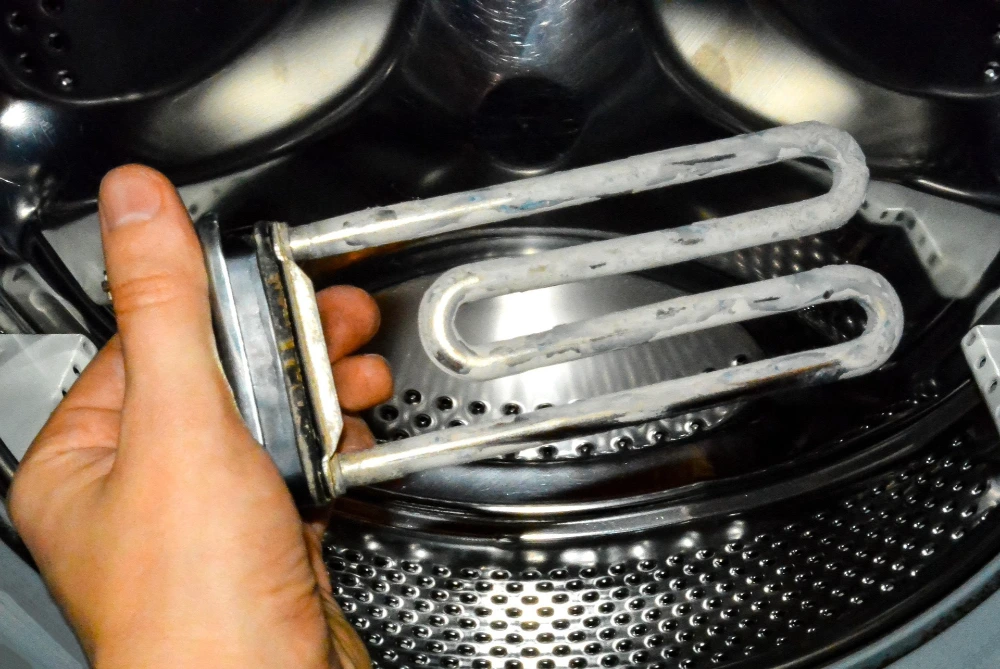
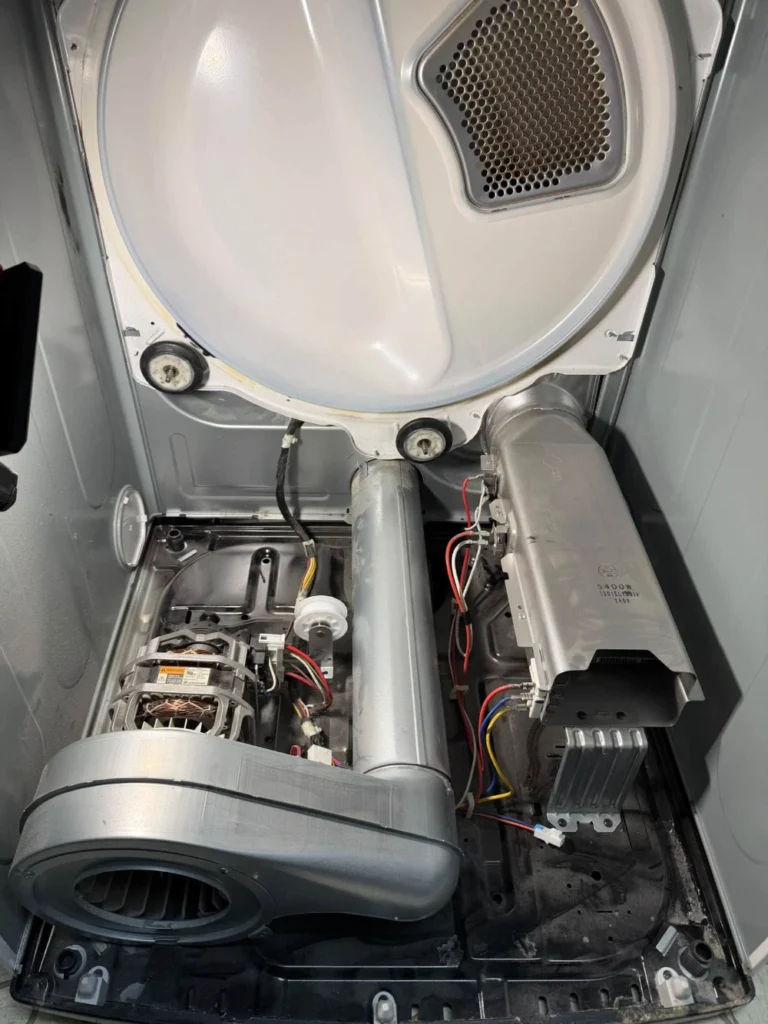
On electric dryers, the element can burn out. The drum spins but nothing heats.
Thermal fuse
A one-time safety fuse blows when the dryer overheats. It often means there is an airflow problem that must be fixed too.
Thermostats
High-limit or cycling thermostats can fail and cut the heat.
Gas igniter or valve
On gas dryers, a weak igniter or a faulty gas valve coil stops the flame.
Electric dryers
Electric dryers use a 240-volt circuit and a heating element. If you have no heat but the drum turns, check the breaker first, then think about the element and the thermal fuse. A fuse that blew because of lint is a warning, not just a part to swap. Replace it without fixing the airflow and it will blow again.
Do not open the dryer if you are not comfortable working near electrical parts. The power cord must be unplugged, and some parts can hold heat after a cycle.
Gas dryers
[confirm gas dryer service with the technician before publishing]
Gas dryers need electricity to run the drum and gas to make heat. An igniter that glows but never lights the flame, a failed gas valve coil or a gas supply problem can stop the heat. If you smell gas, leave the home and call your gas utility from outside. Do not try to fix a gas problem yourself. See dryer repair for what we look at on gas models.
The vent: the most important check
A dryer vent carries hot, damp air outside. A long run, sharp bends, plastic foil duct or lint buildup slow it down. When airflow drops, clothes take two or three cycles to dry, the top of the dryer feels very hot, and the thermal fuse can blow.
- Pull the dryer away from the wall and check the hose for kinks or crushing
- Disconnect the duct and look inside for lint
- Check the outside flap opens freely when the dryer runs
- Use rigid or semi-rigid metal duct, not plastic foil
- Keep the run as short and straight as possible
Laramie winters add a twist: a wind-blown or frozen flap on an exterior wall can hold closed or fill with lint and ice.
Signs that point to a specific part
Takes two cycles, hot on the outside
Think airflow first: filter and vent.
Drum turns, no heat at all
Think breaker, element or thermal fuse on electric dryers.
Heat comes and goes
Think thermostat, a loose connection or a weak igniter.
Burning smell
Stop. Unplug the dryer and check the vent and for lint near the heater.
Clothes damp but warm
Think vent restriction or a moisture sensor issue.
Clicks, then nothing (gas)
Think igniter or gas valve coil.
Why a dryer sometimes heats only a little
A dryer that makes some warmth but never enough is often harder to spot than one with no heat at all. The element may be partly burned, one half of a two-stage breaker may be weak, or a thermostat may be cycling too early. More often, restricted airflow makes the dryer cut heat to protect itself, so the cycle seems to run forever.
A simple test helps. Run the dryer for ten minutes on a high-heat setting with a small load, then check the lint filter and the outside flap. If the flap barely moves or the air coming out is weak, the problem is in the vent. If the airflow is strong but the air is cool, the heating system is the next suspect.
Wet laundry is another trap. A washer that does not spin out water well sends soaked clothes to the dryer, and a dryer cannot fix that. If only heavy items stay wet, compare with a lighter load before blaming the dryer.
When to stop and call
- You smell burning or gas
- You find scorched lint or a hot spot near the heater
- The breaker trips again after resetting
- You are not comfortable working near electrical parts
- You have done the checks above and the dryer still does not heat
Call us with the brand, the model number and what you found. Our before-you-call page lists what to have ready.
Dryers in Laramie homes
Laundry rooms in Laramie are often in basements, closets or garages, and many homes are older, so vent runs can be long and routed through tight spaces. Cold laundry rooms in winter lengthen drying times, and the dry air helps, but ice in an exterior vent flap can still block airflow. In rentals and student houses, vents are rarely cleaned, so lint builds up over years. If your dryer is in a rental, tell your landlord or property manager about a heat problem, and call us with the details.
Is it worth repairing?
Elements, thermal fuses, thermostats and igniters are often worth replacing on a dryer in otherwise good shape. A failed control board on an older dryer is a harder call. We look at the age, the fault and parts, then tell you what we would do. See repair or replace.
Keep it from happening again
Clean the filter every load
It is the simplest way to protect the heater.
Wash the filter monthly
Fabric softener leaves a film that blocks airflow.
Clean the vent yearly
More often with heavy use or long ducts.
Do not overload
A packed drum cannot dry or breathe.
Check the outside flap
Especially after storms and in winter.
Give it room
Leave space behind the dryer for the duct.
Related help
Dryer repair
Our full dryer repair service.
Dryer not starting
If it does not run at all.
Dryer making noise
Squeals, thumps and rattles.
Repair or replace
How we weigh it.
Before you call
What to have ready.
All repair guides
Browse by symptom.
Frequently asked questions
Straight answers to what people ask us most.
Why is my dryer running but not heating?
A blocked vent, a tripped breaker, a failed heating element, a blown thermal fuse or a thermostat problem are the usual causes. Gas dryers can also have an igniter or valve fault.
Can a clogged vent stop a dryer from heating?
Yes. Poor airflow can cause the dryer to overheat and shut off its heat. It is also a fire risk.
Why does my dryer take two cycles to dry?
Usually restricted airflow from a full filter, a clogged vent or a crushed duct.
What is a thermal fuse?
A one-time safety part that blows when the dryer gets too hot. It must be replaced, and the cause of the overheating must be fixed.
Is it safe to use a dryer that is not heating?
Check for burning smells and hot spots first. If you smell burning or gas, stop using it.
Why does my electric dryer have no heat but the drum turns?
Check the two-part breaker, then think heating element, thermal fuse or thermostat.
What if I smell gas?
Leave the home and call your gas utility or 911 from outside. Do not use switches or phones inside.
How often should I clean the dryer vent?
At least once a year, and more often with long ducts or heavy use.
Is a dryer worth repairing?
Often yes for common parts. We will tell you honestly when replacement makes more sense.
Can cold weather affect my dryer?
A frozen or stuck exterior flap can restrict airflow, and a cold laundry room can lengthen drying times.
Ready to get your appliance working again?
Call or text with the appliance, the brand and what it is doing, or send a request and we will get back to you.