
Home / Repair guides / Washer not draining
REPAIR GUIDE
Washer Not Draining? Here Is What to Check
A washer stuck with a tub of dirty water is messy and stressful. This guide explains the common causes, what is safe to check and how to handle the water.
First, handle the water safely
- Turn off the washer and unplug it before you touch anything
- Do not open the door forcefully; many front loaders lock while there is water inside
- Keep towels and a shallow pan or bucket ready
- Water and electricity are a bad mix, so keep cords and outlets dry
- If the water is hot, let it cool first
Most washers have a small drain filter or an emergency drain hose behind a front panel. Your manual shows where it is, and the steps below assume you can reach it safely.
The quick checks
Start with the easy causes before assuming a part has failed.
Check the cycle
Make sure the washer has not paused, is not on a soak or hold setting and the door is fully closed.
Look at the drain hose
Check behind the washer for a kinked, crushed or pinched hose.
Clean the drain filter
Many front loaders have a small filter behind a lower panel that traps coins, lint and socks.
Check the standpipe
A clogged standpipe or sink can back up and hold water in the washer.
Common causes of a washer that will not drain
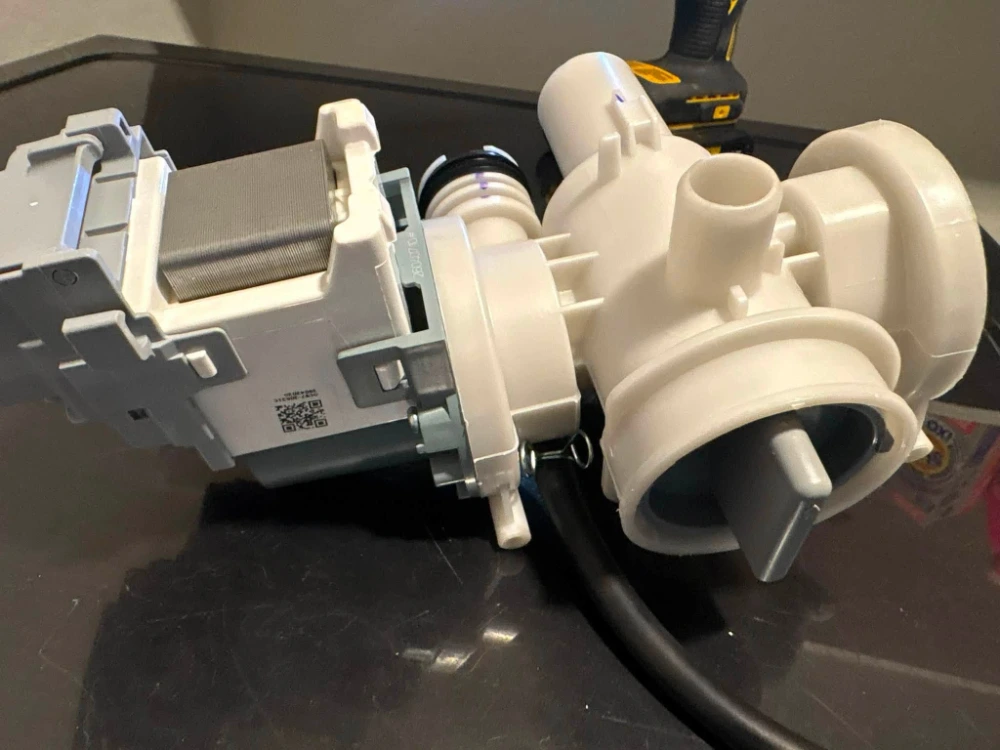
Clogged drain filter or pump
Socks, coins, hair ties and lint can jam the filter or the pump impeller. This is the most common cause.
Kinked or blocked hose
A hose pushed against the wall can crimp. A buildup of lint inside can slow or stop flow.
Failed drain pump
You may hear humming or nothing at all when it should drain. The pump may be burned out or seized.
Lid or door switch
On many washers, a bad lid or door switch stops the drain and spin.
Clogged house drain
If the standpipe overflows or gurgles, the problem is in the plumbing, not the washer.
Control fault
A control board or sensor problem can stop the drain even though the pump is fine.
Top loaders and front loaders
Top-loading washers use a drain pump or a belt-driven pump on the motor. A worn belt or a broken coupler can leave the washer spinning without draining. A washer that fills but never pumps out may have a failed pump or a stuck lid switch.
Front loaders often have an easily reached drain filter and a separate drain pump. They also lock the door when there is water, which is a safety feature. If the door is locked and the tub is full, drain the water first before opening it. See washer repair for more about each type.
How to drain a front-loading washer by hand
- Unplug the washer and place towels and a shallow pan under the access panel
- Open the small front panel near the bottom
- Find the small emergency drain hose and pull it out
- Remove its cap and let the water flow into the pan, emptying the pan as needed
- Then unscrew the drain filter slowly and clear out any debris
- Put everything back and test a short drain cycle
This depends on the model. If it feels unclear, stop and call us rather than forcing anything.
Signs that point to a specific cause
Humming, no drain
Think pump jam or a seized pump.
Silent, no drain
Think switch, control or a pump that has failed electrically.
Slow drain, gurgling
Think clog in the drain line or standpipe.
Water backs up in the sink
Think plumbing, not the washer.
Spins but does not pump (top loader)
Think belt, coupler or pump.
Error code on the display
Write it down; many codes mean a drain fault.
Washers in Laramie homes
Many Laramie homes have laundry in basements where drains sit low and older plumbing can clog, and rentals and shared houses often see heavy use. Cold basements in winter can also freeze hoses, and a frozen drain line can stop water from leaving. If water pools at the standpipe or the sink gurgles, you may have a plumbing blockage that a plumber should handle. If the washer is in a rental, tell your landlord and call us with the details.
What to do with the wet laundry
A tub of soaked clothes can sit for a day without harm, but not much longer. If the washer is stuck and you cannot drain it, wring items out over a tub or sink, then hand-wash or take them to a laundromat. Leaving wet laundry in a closed washer invites mildew and a sour smell that can linger in the drum and the door seal.
Once the washer is draining again, run a hot cycle with a washer cleaner or a cup of white vinegar to freshen it. Wipe the door seal on a front loader, and leave the door ajar between loads so the drum can dry.
When to stop and call
- The washer hums but will not drain after you clean the filter
- You smell burning or see leaks near the pump
- Water backs up from the standpipe or the floor drain
- The door is locked and you cannot drain it by hand
- You have found nothing and the washer still holds water
Have the brand, the model number and any code ready. See before you call.
Why a washer that drains slowly deserves attention
A washer that drains slowly is telling you something. It may be a hose that is partly blocked, a pump that is wearing out or a drain line that is slowly building up. Slow draining often shows up first as clothes that come out wetter than they should, or as a cycle that takes longer than usual.
Fixing a partial clog is a small job. Waiting until the washer fails completely can mean a flood, a stuck door and a ruined load. If you notice slow draining, clean the filter and check the hose now, and call us if it does not improve.
A note for renters and shared laundry rooms
If your washer is in a rental or a shared laundry room, report the problem to your landlord or property manager as soon as it starts, and keep a note of the date and what you saw. Clear details help everyone decide quickly who should arrange the repair.
Is it worth repairing?
A drain pump, a belt, a switch or a hose is often worth replacing on a washer in good shape. We weigh the age, the fault and the cost, and we tell you honestly. See repair or replace.
Keep it from happening again
Check pockets
Coins, tissues and hair ties end up in the pump.
Clean the filter
Every few months for front loaders.
Use the right detergent
Too much soap can cause suds and slow draining.
Do not overload
Heavy loads strain the pump and the motor.
Leave space behind
Keep the hose from kinking against the wall.
Use a lint trap
A hose filter keeps lint out of the drain.
Related help
Washer repair
Our full washer repair service.
Washer leaking
Where the water comes from.
Dryer not heating
The other half of laundry day.
Repair or replace
How we weigh it.
Before you call
What to have ready.
All repair guides
Browse by symptom.
Frequently asked questions
Straight answers to what people ask us most.
Why is my washer full of water and not draining?
A clogged drain filter or pump, a kinked hose, a failed pump or a bad switch are the usual causes. A blocked house drain can also back up.
How do I drain a washer by hand?
Most front loaders have a small emergency drain hose behind a lower panel. Check your manual, use towels and a shallow pan, and unplug the washer first.
Can a clogged hose stop a washer from draining?
Yes. A kinked, crushed or lint-filled hose is a common cause.
Why does my washer hum but not drain?
The pump may be jammed with debris or may have failed.
Why is my washer door locked with water inside?
Front loaders lock while there is water. Drain the water first, then the door can open.
Can too much detergent stop draining?
Excess suds can slow draining and trigger errors. Use the amount recommended for your machine.
Is it a washer problem or a plumbing problem?
If water backs up at the standpipe or the sink gurgles, the plumbing may be blocked. If not, the washer is likely at fault.
Can cold weather cause drain problems?
A frozen drain line or hose in an unheated space can stop water from leaving.
Is it worth repairing my washer?
Often yes for pumps, belts and switches. We will tell you honestly.
What should I do while I wait for service?
Unplug the washer, drain what you can safely and keep the area dry.
Ready to get your appliance working again?
Call or text with the appliance, the brand and what it is doing, or send a request and we will get back to you.