
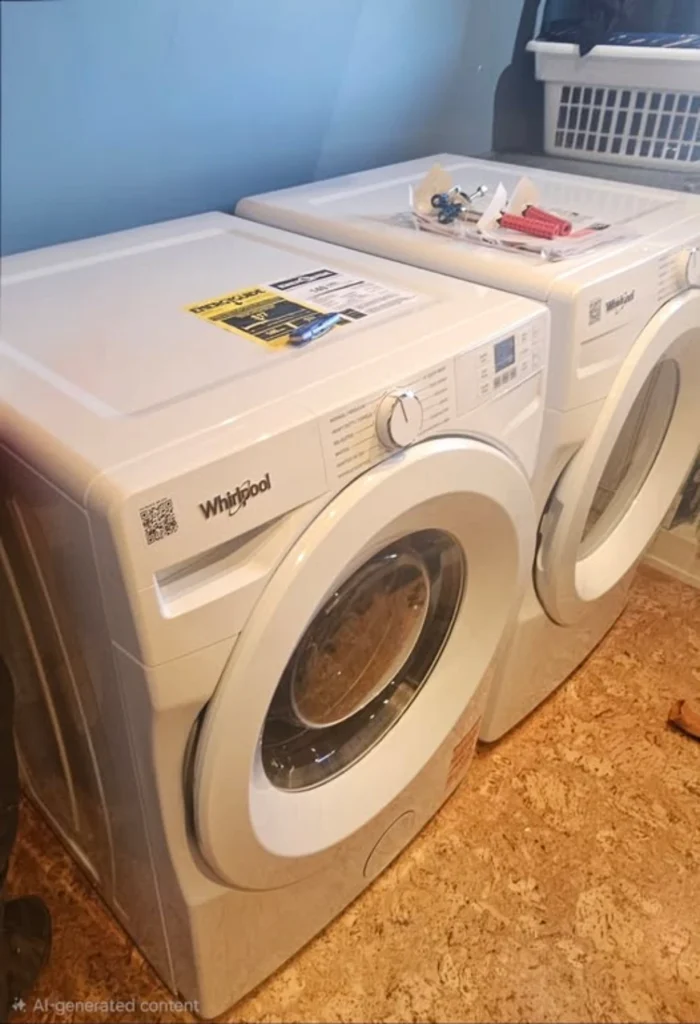
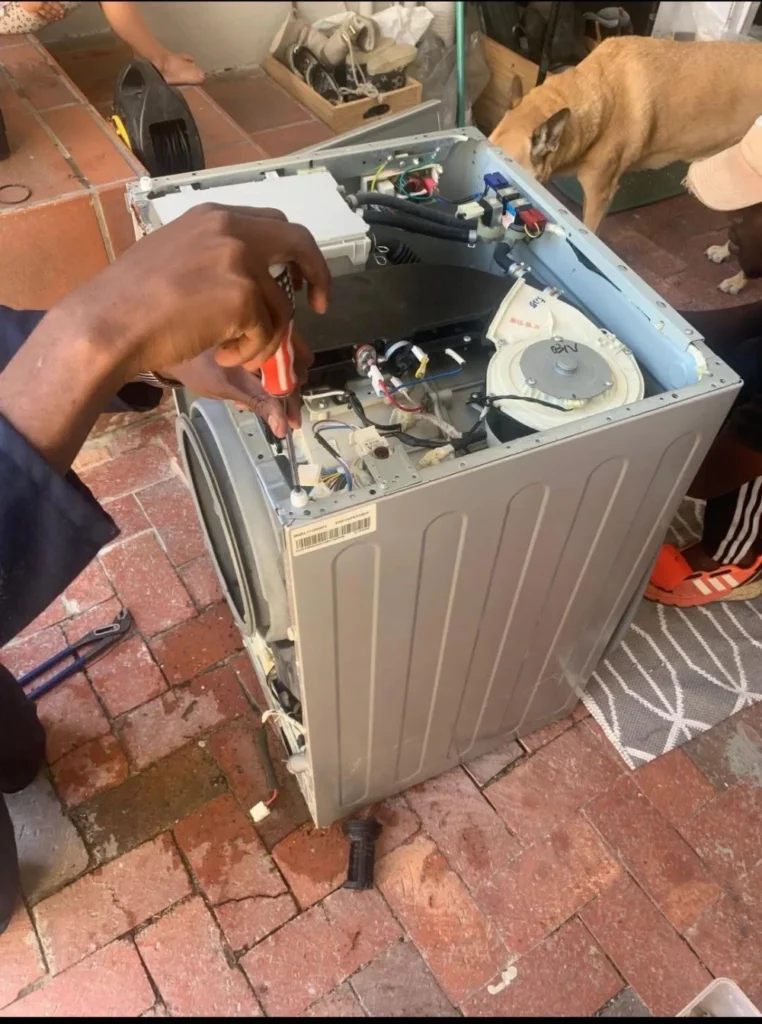
Washer problems we repair in Laramie
Washer faults look dramatic, but the causes are usually simple to test. These are the calls we get most.
Washer not draining
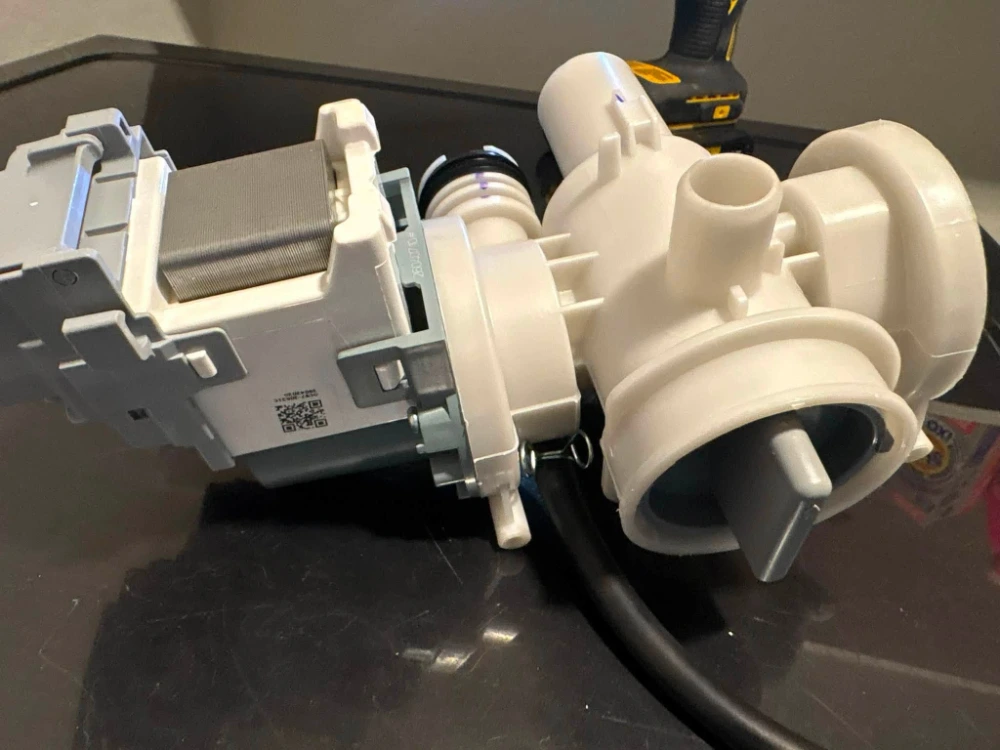
Water left in the tub after the cycle. A clogged drain pump filter, a kinked or blocked drain hose or a failed drain pump are the usual causes. Read more on a washer that will not drain.
Washer leaking
Water on the floor comes from hoses, the door seal, the pump or the tub. Where it shows up tells us a lot. See why a washer leaks.
Not spinning
Clothes come out soaking wet. An unbalanced load, a worn drive belt, a failing motor coupling, a lid or door switch or a control fault can all stop the spin.
Will not fill, or fills slowly
Closed or partly closed supply valves, a clogged inlet screen or a failed water inlet valve are common. Check that both the hot and cold taps are fully open.
Will not start
Lights but no action, or no lights at all. Door latch, lid switch, control, power cord and outlet problems all look alike from the outside, so we test before we guess.
Banging, shaking or walking
An unbalanced load, worn shock absorbers or suspension rods, worn drum bearings or an object stuck between the tub and drum can make a washer move and bang.
How we diagnose a washer
We start with the simple things because they are often the answer, and save you a larger repair bill when they are.
Hear what happened
Did it stop mid-cycle? Is there a sound, a smell or a code? When did it last work properly? Details point us in the right direction.
Check the basics
Hoses, filters, level, load balance, water supply and drain connection. A surprising number of washer calls end here.
Test the parts
We test pumps, switches, valves, motors and sensors with proper tools rather than replacing parts on a hunch.
Explain your options
You hear what failed, what the repair involves and whether replacing the washer makes more sense, before we start.
Front-load and top-load washers
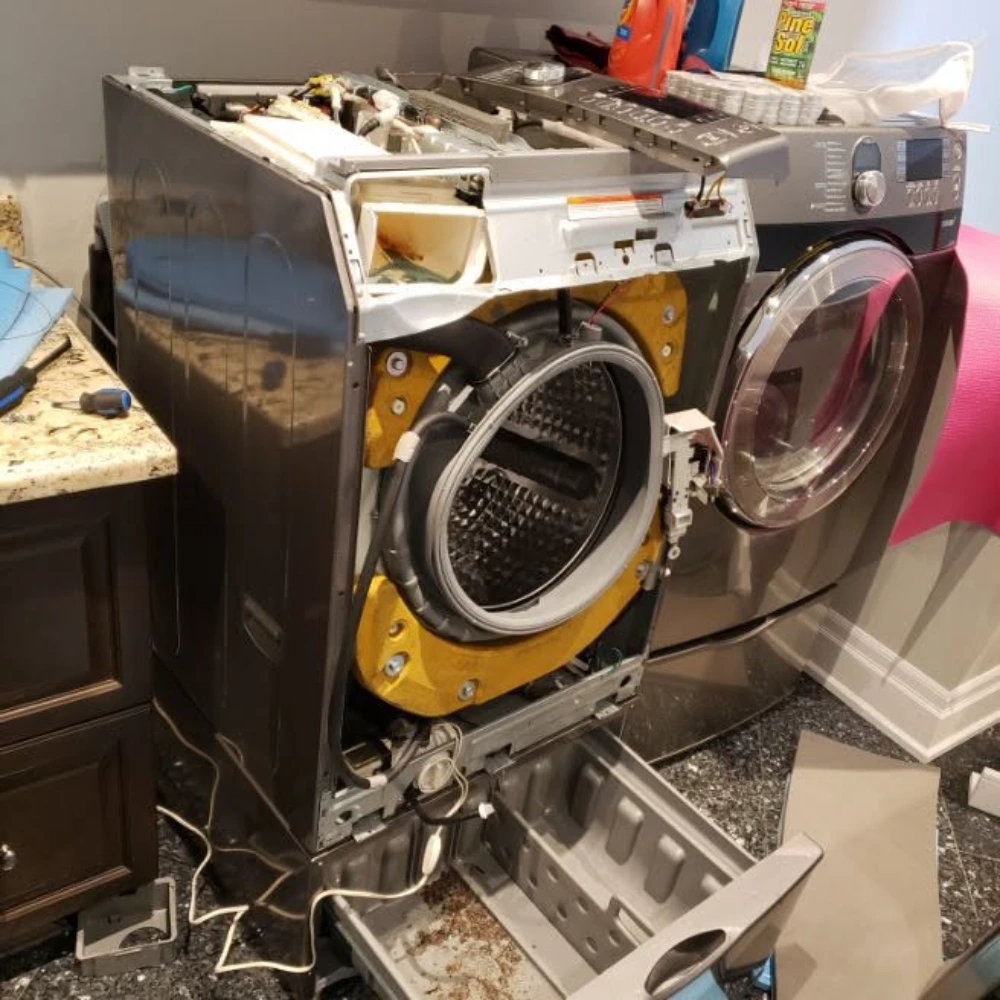
Front-load washers are efficient and gentle on clothes, but they have their own habits. The rubber door seal can trap moisture and develop mold and odor, and the drain pump filter sits behind a small panel at the bottom front where coins, socks and lint collect. A bad bearing shows up as a rumble that grows louder in the spin cycle.
Top-load washers use a lid switch, a drive system under the tub and either an agitator or an impeller. Lid switch problems, worn drive components and a basket that is out of balance are common. High-efficiency models of either type are fussy about suds, so too much detergent can cause long cycles, error codes and smells.
Tell us the brand, the type and the model number when you call. It helps us plan the visit and bring the right tools.
Why laundry equipment has a rough time in Laramie
Plenty of Laramie homes put the washer in a basement, a garage or a utility room that is not always well heated. Supply hoses and drain lines in cold spaces can freeze and crack, and a hose that gets stiff and brittle is more likely to split. If a washer starts leaking after a hard cold snap, check the hoses first.
About 46% of Laramie residents rent, and the University of Wyoming adds a large student population. Shared laundry rooms and busy households mean washers get loaded heavily and moved around, and small problems tend to be reported late. If you rent, tell your landlord or property manager as soon as something changes.
Many homes here are older, with laundry hookups added or altered over the years. Drain standpipes that are too short or too narrow, and shutoff valves that no longer turn properly, are all things we run into and can point out while we are there.
Water on the floor: what to do right now
A leaking washer can do more damage than the washer is worth. These steps limit the harm.
- Stop the cycle and, if the floor is dry around the outlet, unplug the washer
- If you cannot reach the plug without stepping in water, turn off the breaker for that circuit instead
- Close the hot and cold supply valves behind the washer
- Mop up the water and note where it came from: hoses, door, bottom or back
- Do not run the washer again until we have found the cause
Take a quick photo of where the water appeared and any labels on the washer. It makes the phone call faster, and it helps us diagnose the leak.
Repair or replace?
A new drain pump, inlet valve, lid switch or door latch on a washer that is otherwise in good shape is usually worth doing. A failed bearing or a cracked tub on an older machine is a bigger decision. We consider the age of the washer, what failed, how available the parts are and how the repair compares with replacing the washer, then tell you what we would do.
Our page on repair or replace explains how we weigh these decisions.
What to have ready when you call
- Brand, type (front or top load) and model number if you can find it
- What the washer is doing and when it started
- Any error code or flashing lights
- Where water appears if it is leaking
- Whether the washer is in a basement, garage or main floor laundry room
Our before-you-call checklist lists quick checks that sometimes fix the problem on the spot.
Habits that help a washer last
Use the right amount of detergent
High-efficiency washers need less detergent than most people expect. Extra suds cause long cycles and smells.
Leave the door ajar
On a front loader, leaving the door open between loads lets the drum and door seal dry out.
Clean the pump filter
If your washer has an accessible drain pump filter, clean it a few times a year.
Check the hoses
Look at the supply hoses now and then and replace any that bulge, crack or weep.
Level the washer
A washer that rocks vibrates more, wears faster and may shift out of position.
Do not overload
Packed drums strain bearings and suspension and leave clothes poorly rinsed.
More help for your washer
Washer not draining
Causes and what to check first.
Washer leaking
Where leaks come from and what to do.
Dryer repair
Washer and dryer both acting up?
Appliance installation
New washer? We can help install it.
Before you call
Quick checks and what to have ready.
All services
See everything we repair.
Frequently asked questions
Straight answers to what people ask us most.
Why will my washer not drain?
The usual causes are a clogged drain pump filter, a kinked or blocked drain hose or a failed drain pump. If the tub is full of water, unplug the washer before reaching into the filter area.
Why is my washer leaking?
Leaks come from loose hose connections, a worn door seal, a failed pump seal or a cracked tub. Where the water appears is a useful clue, so tell us exactly where you see it.
Why is my washer not spinning?
An unbalanced load, a worn drive belt, a bad lid or door switch, a failing motor or a control problem can stop the spin. Redistributing the load is worth trying first.
Is it worth repairing an older washer?
Often yes, when the failure is a pump, valve, switch or hose and the rest of the machine is sound. A failed bearing or a cracked tub on an older washer is a harder call, and we will tell you honestly.
Do you repair both front-load and top-load washers?
Tell us the brand, type and model number when you call and we will confirm we can help before we book a visit.
Why does my washer smell?
Front loaders collect moisture in the door seal and drum, and too much detergent leaves residue. Leave the door ajar between loads, wipe the seal and use the recommended amount of detergent.
Why does my washer shake or bang?
An unbalanced load, an unlevel washer, worn shock absorbers or suspension rods and worn bearings are the usual causes. We find which, and tell you what it needs.
Do you service washers in rentals and student housing?
Yes. We work with renters, off-campus households near the University of Wyoming and landlords with several units. Tell us who can approve the repair and when someone will be home.
What should I do while I wait for service?
Stop the washer, close the supply valves if it is leaking and unplug it when it is safe to do so. Wring out wet laundry and hang it up, or take it to a laundromat.
Do you install washers?
We help install new appliances. See our appliance installation page, and tell us the washer type and the hookups when you call.
Ready to get your appliance working again?
Call or text with the appliance, the brand and what it is doing, or send a request and we will get back to you.